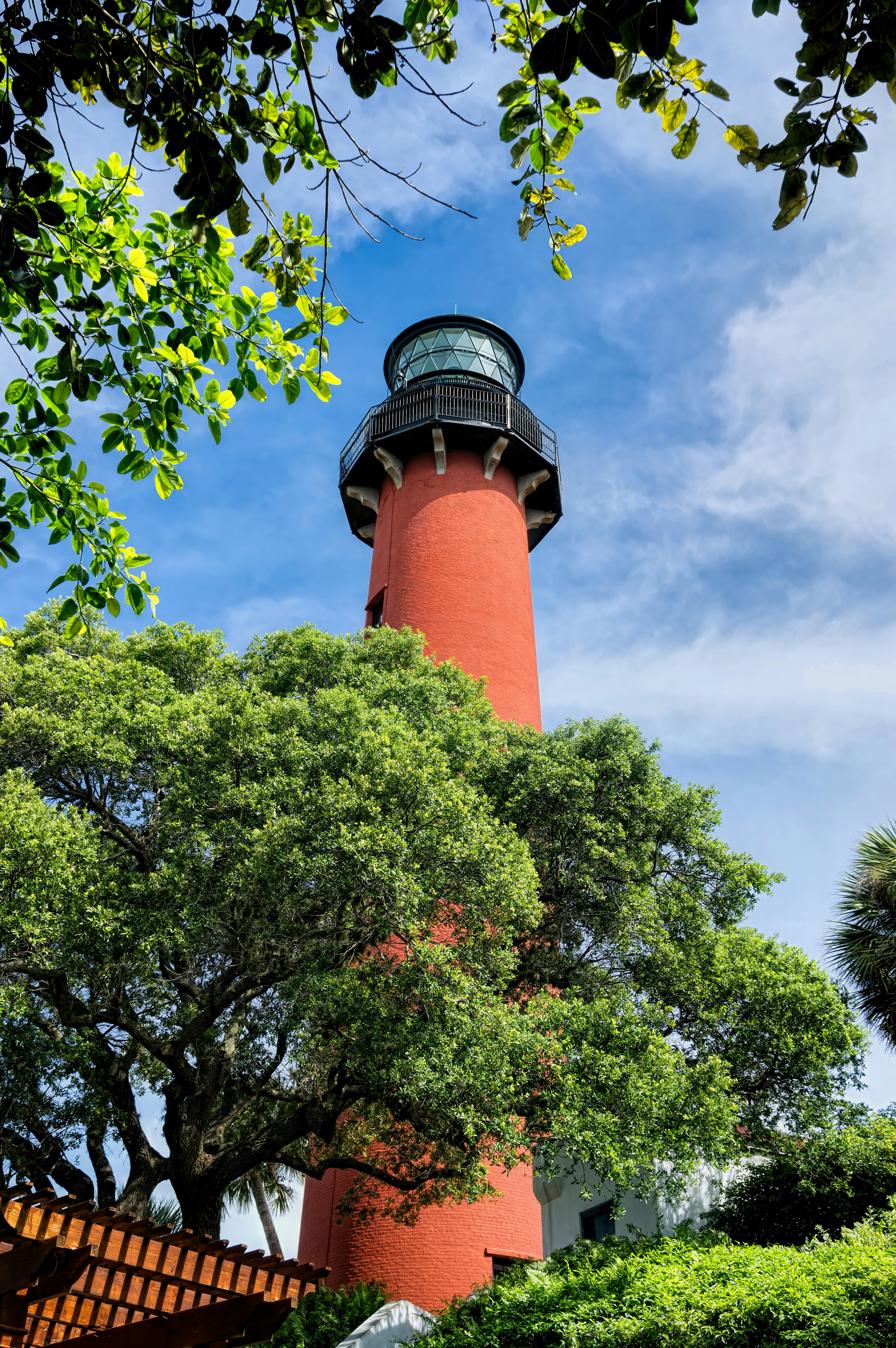
The Jupiter Inlet Lighthouse, a beacon of maritime history in Florida, has stood since its official lighting in 1860. Its history dates back to 1853 when Congress authorized its construction. The lighthouse, designed by Lieutenant George Gordon Meade and later enhanced by Lieutenant William F. Raynolds, stands at 108 feet tall. It played a significant role during the Civil War when it was darkened by Confederate sympathizers. It was not until 1866 that the Jupiter Inlet Lighthouse was relit and has since remained an active navigation aid.

The lighthouse has witnessed over 70 different keepers until 1939, after which the US Coast Guard took over until its full automation in 1987. The preservation of this historic structure has been ongoing. In 1999, a significant restoration project was undertaken to repair weather damage, which was completed in 2000 with the help of the Florida Department of Transportation and the Town of Jupiter. The Loxahatchee River Historical Society (LRHS) has been pivotal in the lighthouse’s maintenance and public tours since 1994.
In 2008, the site was designated the Jupiter Inlet Lighthouse Outstanding Natural Area (JILONA), recognizing its ecological and cultural importance. The LRHS and other local partners have since worked on various projects, including habitat improvement for endangered species and stabilization of the river slope after hurricanes.

The Bureau of Land Management (BLM) recently sought public comments on the future management of the JILONA. Their long-term management planning focuses on conserving biological, cultural, and historic resources while considering the impact on recreation and visitor services. This effort aligns with the ‘America the Beautiful’ initiative, aiming to find a balance between conservation and recreation.
As the lighthouse looks ahead, it continues to draw visitors and stands not only as a historic monument but also as a testament to community efforts in preservation and environmental conservation. The future plans are to continue these efforts, ensuring the lighthouse can be enjoyed by generations to come while maintaining its historical integrity and the natural beauty of its surroundings.
Learn more about Jupiter here.

Leave a Reply